
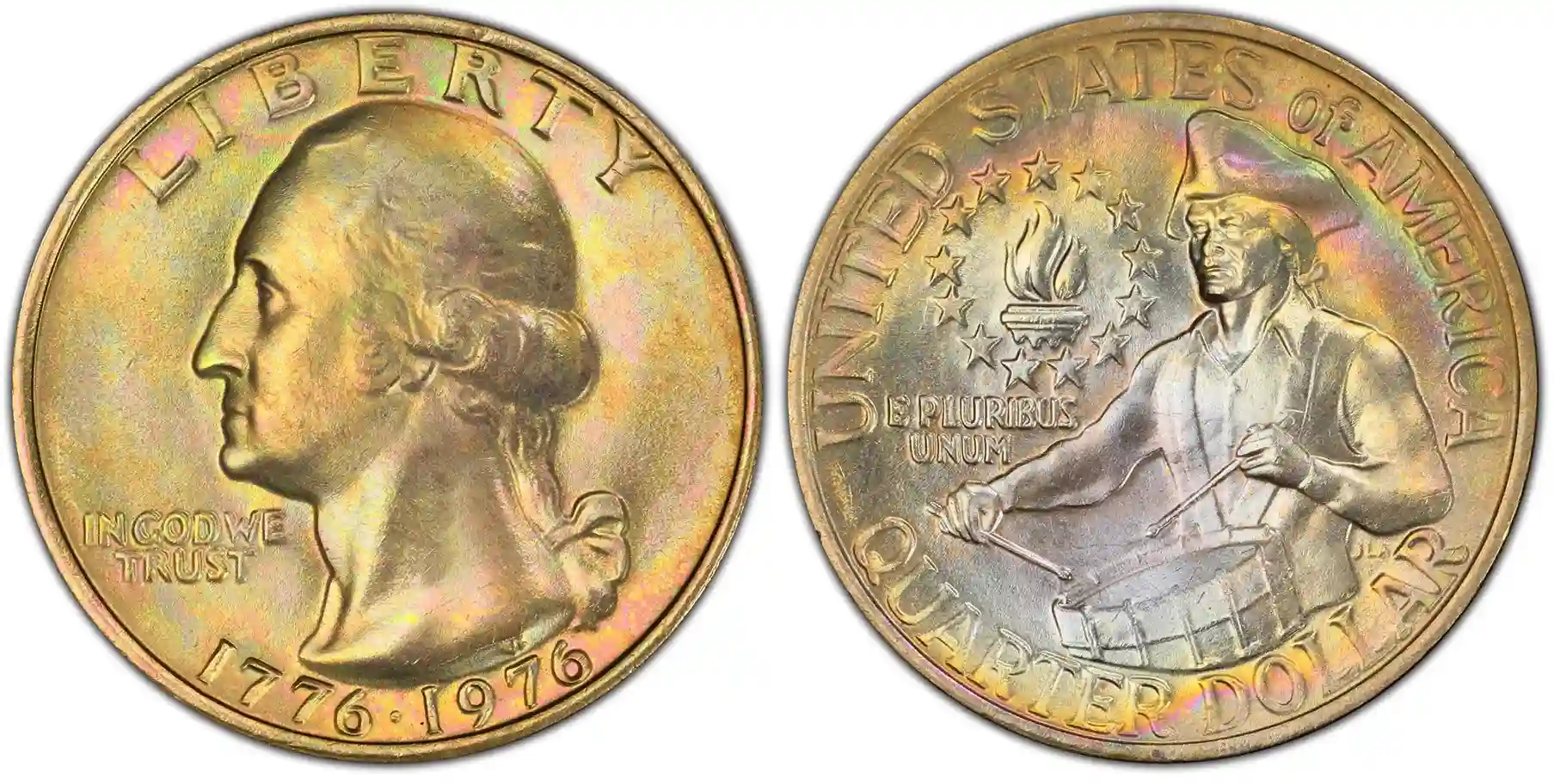
Standard copper-nickel clad coins with no mint mark in average circulated condition usually sell for prices starting from $0.25 up to $1 on the current market today.
Silver alloy collector items in excellent uncirculated condition easily reach a market price from $5 to $15.
Auction record price for a rare copper-nickel coin in perfect condition reached $19200.
Key 1776 to 1976 quarter value drivers:
Metal alloy
Coin condition
Mint errors
Bicentennial Quarter Technical Parameters
Specification Parameter | Copper-Nickel Coin | Silver Coin |
Coin weight | 5.67 grams | 5.75 grams |
Alloy content | 75% copper and 25% nickel | 40% silver and 60% copper |
Mint location | Philadelphia or Denver | San Francisco |
Mint mark | No mark or D | S |
Face value | $0.25 | $0.25 |
Coin Price Chart by Grade
Coin grade shows the physical wear level using the Sheldon scale. This price guide table contains current average values and auction records.
Grade indicators:
Metal shine
Surface marks
Wear level
Coin Condition | No Mint Mark Copper-Nickel | D Mint Mark Copper-Nickel | S Mint Mark Silver | Record Auction Price |
MS60 | $1.20 | $1.15 | $6.50 | $110.00 |
MS63 | $2.50 | $2.10 | $9.00 | $350.00 |
MS65 | $7.00 | $6.50 | $14.50 | $1150.00 |
MS67 | $35.00 | $28.00 | $42.00 | $5200.00 |
MS68 | $1200.00 | $2100.00 | $330.00 | $9600.00 |
MS68+ | $3800.00 | $5500.00 | $2300.00 | $19200.00 |
Collected numbers demonstrate a huge price gap between neighboring grades. This price jump becomes massive when moving from MS67 to MS68 level. Average collectors usually buy coins in MS60 to MS65 condition. Superb gem coins with MS68 grades are extremely difficult to find.
How to Determine Coin Grade Yourself
Evaluating coin quality requires close design details inspection. Below features help identify different grade classes.
Self-grading checks:
Hair lines
Surface luster
Scratch count
Circulated
Circulated quarters show clear wear signs. George Washington hair details look mostly flat. Metal surfaces look dull with many small circulation scratches.
High points on the coin face have lost their original luster. Letters in the motto look slightly rounded and worn down. Most pocket change coins fit into this low grade category.
Visual signs:
Flat hair
Dull luster
Surface wear
Uncirculated
Uncirculated coins keep their original mint luster. Washington hair lines remain sharp and visible. Circulation scratches are absent with only small bag marks allowed.
Coin surfaces show beautiful light reflection when turned under a lamp. Cheekbones and ears on the portrait show no flat spots from wear. These coins must look like they just came from a mint bag.
Grade indicators:
Original luster
Sharp lines
Zero wear
Proof
Mirror fields contrast with frosty design details. Legend letters have sharp and clear edges. Special machines struck these pieces for collector sets on polished coin blanks.
Sells for these coins always require careful handling to avoid mirror surface damage. Proof quarters never entered general circulation. Coin collectors buy them inside protective government plastic packaging.
Proof features:
Mirror fields
Frosty details
Polished blanks
Metal Type Market Value Influence
San Francisco mint produced silver quarters exclusively. Government agencies sold these special collector sets for premium prices. Standard mint runs produced massive copper-nickel quarter amounts for daily trade.
Silver price trends show a major value increase for silver coins over three years.
2024 value: $4.50
2025 value: $5.10
2026 value: $6.20
This growth is over 37%. Higher silver prices directly raise silver coin minimum value. Copper-nickel coins do not depend on precious metal prices.
Coin market demand determines their exact worth. Circulated copper-nickel quarter price stays at face value. Silver melt value provides a solid price floor for S mint mark coins.
Copper-nickel coins have no melt value support beyond a few cents. Long term investors prefer silver quarters for this exact metal price security.
Metal benefits:
Melt value
Price floor
Metal growth
Mint Errors Increasing Coin Value
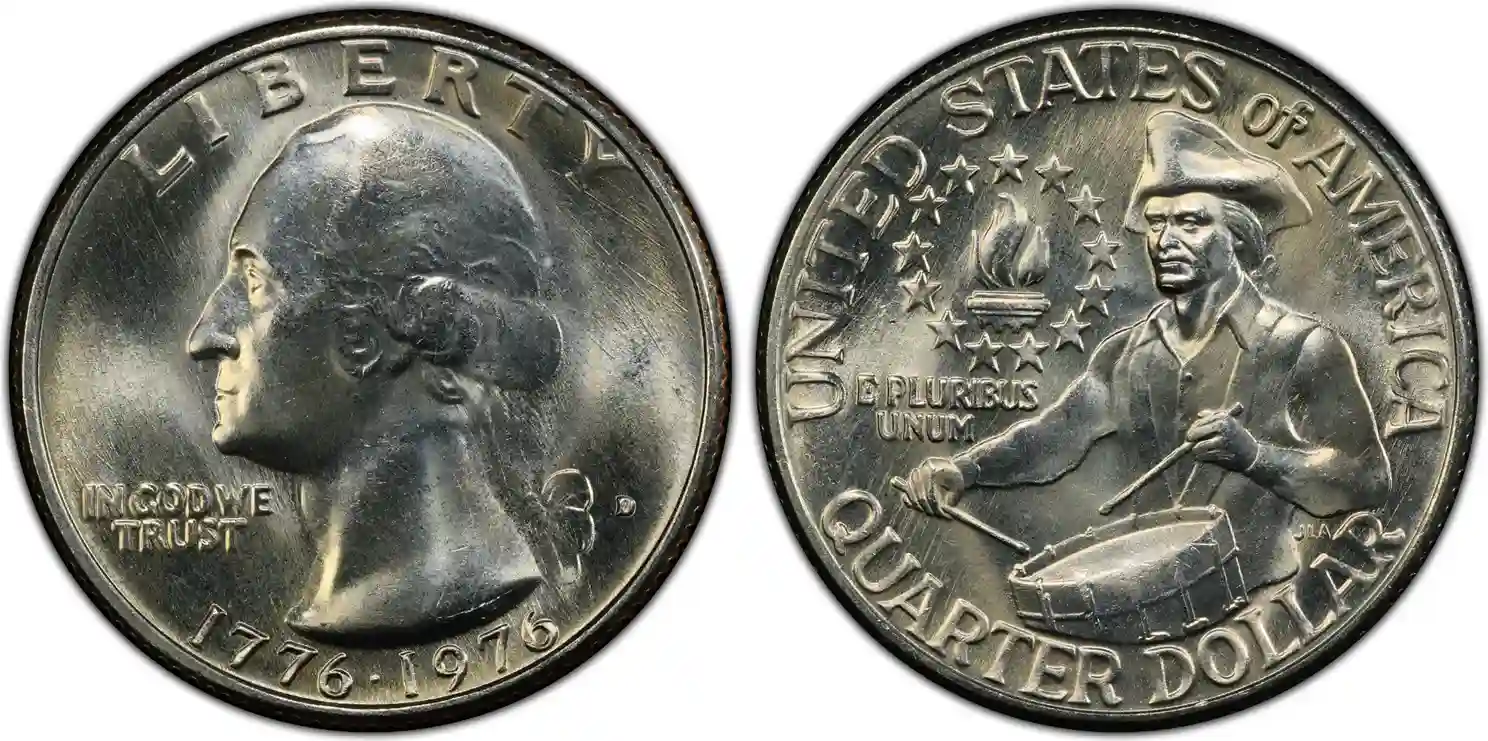
Mint errors create unique pieces worth thousand-dollar sums.
Error list:
Doubled dies
Off-center strikes
Broadstrikes
Filled letters
Double Die Obverse
This defect happens during die doubling processes. Obverse letters show a clear double outline. Doubling is highly visible on the word LIBERTY and dates 1776-1976.
Standard condition coin value is around $200 to $500. High grade Double Die record auction price reached $3200.
Collectors can spot this doubling with coin-identifier.com. True doubling must show separate clear raised letter borders. Machine doubling is a common lookalike error but holds no extra value.
Key details:
Double outline
Clear dates
Raised borders
Off-Center
This error occurs when the coin blank sits off-center during striking. A design section is missing, showing a blank metal edge. A 10% design shift raises coin value to $70.
A 50% design shift with a clear date increases prices to $250. Dramatic off-center strikes are highly popular among error collectors.
Missing dates reduce the error value significantly. A 50% shift showing both 1776-1976 dates commands maximum collector prices.
Error signs:
Blank edge
Missing details
Visible dates
Broadstrike
This mint error happens without a collar to hold the coin blank. Striking pressure makes the coin thinner with a flat edge. All design elements must remain complete.
Average error coin price ranges from $80 to $150. Broadstrike quarters lack the standard reeded edge. These coins look wider than regular quarters. Sellers must ensure the coin has no post-mint damage.
Identification points:
Flat edge
Wide shape
Full details
Bicentennial Filled D
Denver mint die filling causes this error. Obverse D mint mark inner space is completely metal-filled. This letter looks like a solid metal blob.
Collectors pay from $20 to $50 for this small defect based on coin condition. Filled mint marks are common across many coin years. This specific Bicentennial error remains highly collectible. Checking your D quarters can reveal this fun and easy find.
Defect markers:
Filled letter
Metal blob
D mark
Practical Tips to Protect Coin Value
Poor coin storage can destroy valuable items instantly. Collectors lose money from bad care habits. Direct coin surface cleaning with brushes ruins original mint luster.
Cleaning reduces coin grade levels, destroying historical and money value. Acid cleaners leave ugly dark spots on metal. Real market cases show an MS67 coin value dropping from $50 to $2 after cleaning.
Long term storage requires plasticizer-free holders. Acidic holder plastic eventually destroys metal surfaces. Always handle coins by edges to prevent face contact.
Skin finger oils leave dark spots that stay forever. Coin albums must use high quality paper materials. Moisture and high humidity ruin copper-nickel and silver coins alike. Safe storage boxes should stay in dry climate controlled rooms.
Protection rules:
Edge holding
Hard holders
Dry climate
Zero cleaning
Coin Collector Investment Advice
Bicentennial quarter investing needs careful planning and market research. Avoid buying raw coins from random online sellers. Safe buyers purchase certified coins with professional grading guarantees.
Top grading company slabs guarantee authentic coin states. A $1000 raw coin purchase often leads to losses due to hidden problems. Wise investors target MS66 or higher grades for steady value growth.
Low grade items are too common, reducing long term profit potential. Building a high grade set takes time and patience. Reviewing auction price histories helps buyers make smart bids. Excellent coin collections grow in value over several decades.
Wise actions:
Certified coins
High grades
History check
Long wait